

Empire, Spiritual Evolution, World Peace.
Posted on November 3, 2015 Leave a Comment
This writer speaks of the end of war and ends with a video worth watching.

by Jerry Alatalo
“He who does not bellow the truth when he knows the truth makes himself the accomplice of liars and forgers.”
– CHARLES PEGUY (1873-1914) French writer
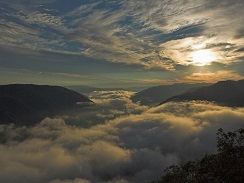
 ery soon, killing and violent destruction will become unacceptable by humanity as means for increasing power, wealth, profits and market share. That time is approaching rapidly, marks what will become recorded in history books as the greatest positive change ever, and humanity will have every reason for taking part in celebrations around the Earth – because “War is over!”
From a spiritual or metaphysical perspective, the end result of a global trend which began with the appearance and increasing use of the internet could accurately be seen as a literal and positive, “game changing”, historic and powerful spiritual evolution of all mankind. What makes the imminent and awe-inspiring transformation that’s occurring and growing worldwide possible is a profound realization by more…
View original post 1,113 more words
JAKE 5:1
Posted on October 28, 2015 Leave a Comment
Seems like Jake got the help he needed. What’s next?

A Small Act of kindness Disarms anti-Muslim Protester.*
Posted on October 25, 2015 3 Comments
Here’s a Sunday story that shows the true purpose of all religions.

A Small Act of kindness Disarms anti-Muslim Protester.*
By Amanda Froelich
“There is no such thing as a small act of kindness. Every act creates a ripple with no logical end.” – Scott Adams
What would you do if an angry mob threatened to disrupt the peace at your place of worship?
If you’re Cynthia DeBoutinkhar, a Muslim woman who attends the Noor Islamic Cultural Center in Ohio, you give them a hug and offer them a free breakfast.
After a Facebook campaign tried to organize a picketing at dozens of mosques around the U.S. on October 10th, the attendees of the mosque were prepared for anything to erupt.
They nervously awaited the protest and were surprised when only one individual arrived with signs denigrating Islam. Many tried to welcome the sole protestor and offer her coffee and bagels inside the mosque, but she repeatedly refused and continued spewing…
View original post 335 more words
Animalia – A Unique Storytelling Performance
Posted on October 24, 2015 3 Comments

Tonight, 10/24/2015, I will perform in my first stage show in years. I tell a story for the finale of this unique fashion show/storytelling performance.
Homer has a 30 year history of annual wearable arts fashion shows. This year the conveners wanted to take a break and the Bunnell Arts Center needed a fund-raising project for the Arts-in-Schools Program.
Initially I had no intention of participating. I am not a fashion or mask designer. But when the artistic director of the Bunnell Arts Center, Asia Freeman, invited me to participate I thought I do tell animal stories.
Raven stories are plentiful among Alaska Natives and Raven is my totem. So I found several versions of the story of how Raven brought light to the world and adapted them into my own. It serves well as a finale story. All of the animals come out to see the new light.
I was quite surprised to see my name featured on the flyer. Aku-Matu, the guest featured Alaska Native teller, and I are the only speakers in the performance.
So, even though you can’t be here, visit this link, and send me a wish for an entertaining night.

Vulnerability, an Essential Element of Good Storytelling
Posted on October 17, 2015 2 Comments
 (Follows is the second of a series of guest blogs I’ve written for Juan Rodriguez’s Blog, Haki Storytelling, with his introduction and title.)
I said, one of the main purposes of storytelling is to tune in to people in our own personal or corporate way. Make them understand what we are and what is our position and to the world. Being vulnerable is an essential element to achieve this.
We live in a fast-paced world, and few moments we experience full consciousness, therefore, one of our duties, as storytellers, is to create narratives that force our audience to see the world differently; get to experience life more consciously.
We believe that we need to know what qualifications and credentials of a person are, but really want to know where they come from, how they have shaped the experiences through life to become what they are today.
If people know that motivates you, they know how to establish a relationship with you – Michael Margolis –
HOW I BECAME SKYWALKER STORYTELLER – PART 2
Our lives are stories we tell ourselves. Most often we are so involved in our stories, we don’t think of them as stories. “This is my life.” And it is a very serious affair. But, if we step away from our attachment to our actions and our fears of how we are seen, we will see the stories we’ve told ourselves to create who we are.
We start telling stories when we’re children. Sometimes it’s our imagination and sometimes it’s just how we see ourselves in the world. One of the stories my mother always loved to tell about me was when I was three years old. It was the mid-1950s and we lived in Mobile, Alabama.
One day we were watching a local dance school performance on TV. At that early age, I knew what I wanted to do. I turned to Mama and said, “I want to go to that dance school.”
Mama gently said, “Honey, you can’t go to that school. It’s for white girls.”
I looked at my skin and looked at the girls on TV and said, “I’m white.”
Oddly enough, that story stuck with me. I never thought of myself as white. I identify as black. But my racial identity has been questioned throughout my life. My skin is light colored. I’ve had people ask me if I was from another country or Native American. I always smile and say, “I’m black and was born in the USA.” Of course, I have a story of why I call myself black.
I met Gwendolyn Brooks, the first black female poet to win the Pulitzer Prize, several times in different cities over a span of decades. The last time I saw her speak was when she was in her eighties, giving a presentation in Denver, Colorado.
She said, “I call myself black instead of Afro-American. To be black is to be universal. Every cultural, racial, or ethnic group has its black people. Sometimes we’re actually black or dark skin colored. Other times, we’re the outcasts, the black sheep, the ones who just don’t fit in, no matter how hard we try. We are the ones who never accept the status quo, who always ask the questions no one wants to hear.”
I feel her description fits me perfectly. I’ve always felt myself an outsider. Possibly growing up in an Air Force family, I never spent more than two years in any one school, so didn’t have the opportunity to develop lasting friendships. And maybe that’s why I became a writer and storyteller.
The first story I consciously wrote was when I was in third grade. I stapled together several sheets of construction paper, wrote, and illustrated my first book. It included a story about a poor little girl coming upon the birth of Jesus and a poem about spring.
My storytelling took a theatrical turn with my sisters in our playtime. For years we were the Little Women because it was a book about four sisters I read. When we moved to Panama City, Florida and had a large backyard to play in on hot summer days, we became the Cartwright family because we liked the TV show Bonanza. We didn’t see any conflict pretending to be three brothers. The fun was being cowboys.
In fifth grade writing and storytelling blossomed for me. I read The Diary of Anne Frank and began keeping a diary. That was the beginning of my habit of writing about my deepest feelings when I didn’t feel close enough to anyone to share my thoughts and dreams.
Diary writing inspired me to write stories. One was about a little girl and boy. One day they were swimming at the beach. A strong current pulled them deep under the water. They were amazed they could breathe when they landed at the bottom of the water standing in a beautiful city.
They met the kind and friendly king and queen who invited the children to stay in the underwater city. But the little boy was afraid and wanted to return home. The underwater people told the children to come back at any time. Eventually the little girl did.
I had no friends to share my story with, no outlets to print it, no one encouraging me to keep writing stories. So, I continued to create stories at night in my mind to put myself to sleep. Not until high school did I share an original story with others.
My senior year, in the talent competition for the Junior Miss Contest, I created a story of a little girl who wanted to march in a parade. The story ended with me performing an original dance to the tune “76 Trombones “ from the musical The Music Man. I didn’t know then, years later I would share stories and dance on many stages in cities and towns across the USA.
A state of Monologue: Terror or Resistance
Posted on October 16, 2015 1 Comment
From a Palestinian mother a balanced and compassionate look at what is happening in Jerusalem now.

My sister: “ did you see that video? The news? They crucified that poor man. They left the little boy bleeding. They are inhuman. They are pathetic. They are criminals.
My Israeli friend: “ yes but, he tried to kill an Israeli? Do you think it is ok to kill Israelis?”
Between the two monologues, trying to convince my sister that it inhumane, true. But yet, we should think of the moment before. What if it was one of our children who were stabbed and the stabber is on the ground?
I was asking my Israeli friend in response: “ stabbing was not right. But killing and lynching was a normal response?
There is this gap where both sides stop seeing or comprehending the other side completely. As if it is a complete wired zone. No tolerance, no understanding, and a total sense of compassion are completely lost.
We are…
View original post 1,697 more words


 Skywalker Storyteller Works